
Behind Food Waste: Plastic


As I hope you all know, the month of July is celebrated by going Plastic-Free! So, keeping with our 2025 theme of Behind the food waste, this month we’re going on a deep dive into, you guessed it: Plastics!
We all know what plastic is in the sense that it’s most of the packaging we buy, it’s the bag inside the box of cereal, it’s the tray of toffee pops, it’s the lining of your takeaway coffee cup, but like, what is it and where did it come from?
In many ways, plastic is an amazing product. It’s cost-effective to produce, it’s durable yet lightweight and it comes in many different forms, meaning that its applications are almost endless. Plastic is also key when it comes to reducing food waste! Plastic packaging protects food from environmental factors like air and moisture, which can reduce its shelf life. Plus, it’s not as breakable as glass and lighter than both glass and metal, meaning fewer transport emissions. Don’t worry, I’m not going full plastic here, but it’s easy to see why we adopted it in the way we have.
So what is it? Plastics are synthetic materials made of polymers derived from raw materials, aka fossil fuels - mostly crude oil and natural gas, as well as sometimes coal. Now I’m no scientist, but I’ve attempted to break down the basic process. The raw materials are refined, transforming the crude oil into different petroleum products. Throughout the process that separates liquids and gases, a compound called naphtha is produced, a key component in making a large amount of plastic. In addition, lighter gases such as ethylene and propylene are converted into polymers through a process called polymerisation. From there, the materials are compounded and blended to their finished form or into pellets, which are then formed into the final products. The different combinations help form plastics for different purposes, such as the thin plastic bag or the fuselage of the Dreamliner 878. For more on how plastic is made, see here.
The first known synthetic plastic was discovered in 1907. Rolls Royce started using a type of plastic - phenol formaldehyde in its car interiors in 1916 and Harrods in London displayed their first plastic tableware by Brookes and Adams in 1926. During the 1930’s the plastics industry started to develop with the discovery of common plastics. These include the likes of polyethylene which is used for bottles and plastic bags; Perspex, which was first used as aircraft canopies; the first commercial production of polystyrene; PTFE, better known as Teflon; and nylon fibre, which is still used today in much of our clothing and made way for the first nylon tufted toothbrush in 1938.
During World War II, there were new creative uses of plastic, such as polyethylene in radar and the discovery of “super glue” by Dr Harry Coover, Eastman Kodak - yes, the same Kodak many of us will recall from our film-buying days. But it was really in the post-WWII era that plastics started to boom. Monsanto brought out the Sqezy bottle, a replacement for heavy and breakable glass for common household items such as dishwashing liquid and shampoo. Velcro was invented in 1948, followed by Tupperware (which quickly became a household name) and Lycra (what would the 80s have been without it?!) in 1949.
The 1950s brought us new textiles, toys (including the Hula Hoop, Lego and Barbie), along with other domestic uses that were easy and cheap to produce, as well as the now-banned plastic bag.
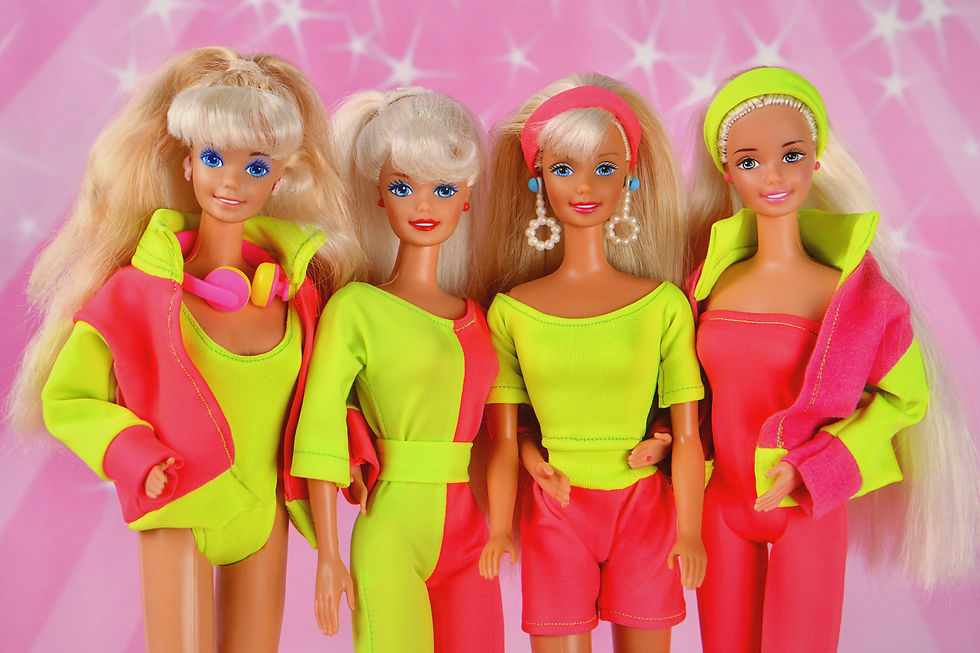
By 1976, the many forms of plastic had become the most used material in the world, with new uses being found from domestic life to medical devices and information technology.
It was also during the 1970s that early indicators of plastic as a problem started to show. Pollution both on land and in the ocean had increased, much of it plastic and the realisation that this miracle product doesn’t break down or go away emerged. In 1988, the triangle recycling symbol was introduced, a further sign of the recognition that plastic is an issue.
With so many different types of plastics and new applications being discovered over the last 100 or so years, it’s no surprise that plastic production has increased exponentially. It’s estimated that over 9 billion tonnes of plastic were created between 1950 and 2017, with over half of that being produced after 2004.

In 2024, over 400 million tonnes of plastic were created and 220 million tonnes of plastic waste were created. With around 40% of plastic going towards packaging, so much of what is created is also wasted within the same year. And it’s that plastic waste that’s really causing issues.
The number of times I’ve heard “but it’s recyclable,” in theory, yes, some plastic is recyclable, but the reality is that only around 9% of all plastic ever made has actually been recycled. Plus, each time plastic is recycled, it reduces in quality. So unlike, say, aluminium, which can be recycled endlessly without an impact on quality, plastic can only be recycled a handful of times at best.
So, with limited recycling actually happening, plastic has nowhere to go. And as mentioned earlier, plastic just doesn’t go away. While yes, it breaks down, it’s not like other materials, say food or organics that break down into compost that can be reabsorbed as nutrients to grow more food. Instead, plastic breaks down into smaller and smaller pieces. These are referred to as microplastics and nano plastics and these are, well, everywhere. Our oceans are full of it. You might be familiar with the Great Pacific Garbage Patch. A 1.6 million square kilometre area (that’s almost six times the land area of Aotearoa) in the Pacific Ocean between Hawaii and California that, as its name suggests, is a plastic accumulation zone. In researching this article, I was horrified to discover that it’s not even the only one, just the largest of five of these huge areas where plastic rubbish dominates the ocean. The plastic in the ocean is having detrimental impacts on wildlife and ecosystems. We all know how important our oceans are in the fight against climate change (they're a huge carbon sink) and us changing their make-up with plastic risks upsetting the balance.

These days, we’re so accustomed to images of dead wildlife with bellies full of plastic, you’ve no doubt seen that turtle with the straw video. I’ve started to become less shocked at the places plastic is turning up - in our blood, in a human placenta and even in our brains. We don't currently know the full extent of the impact plastic has on our bodies, but it's fair to say that no indicators are pointing to it being good for us.
In recent years, Aotearoa has seen progress with bans of plastic bags, straws, and disposable cutlery. But late last year, the current government put a pause on rolling out the third phase, which included PVC and polystyrene food and drink packaging not covered by the previous phase-outs. This was a devastating setback in our fight against plastic pollution.
So, how does all of this relate to food and specifically food waste? Well, so much of the time, when we’re wasting food, we’re also wasting the packaging that it comes in. My favourite way of looking at this is that we’re changing single-use into no-use, which just adds to the travesty.
Now it’s not all that simple either. One of the pieces of plastic that gets me the most worked up is those sleeves on cucumbers - you know the ones. But the research suggests that they help prevent the cucumbers from going to waste, both giving them an additional protective layer for transportation and helping keep air and moisture out to keep them fresher for longer. So the balance is using plastic or having cucumbers that don’t last as long. Vacuum-packed meat can last 3-5 times longer than meat that’s packaged in other ways, making it an appealing option for shoppers. Other items, such as salad leaves, tofu and hard cheese, the plastic packaging traps out the air and moisture that prevents wilting, mould and hardening to prolong the shelf life significantly.
Honestly, I wish I had more answers in this area, but the reality is that for real change to happen in the plastic space, we need viable alternatives and we need them fast. Until we get them, moving the dial on our reliance on plastic feels like a mammoth task. Consumers can play their part by opting for items that are plastic-free; there’s no shortage of awesome kiwi entrepreneurs creating these for us (see the list we've put together here).
While much of the packing you’ll receive when collecting a Foodprint order isn’t plastic, some of it is and regardless, it’s mostly single-use. For me, it’s important that we don’t shift the issue from preventing food waste to creating packaging waste. From day one at Foodprint, I knew I wanted to introduce an easy option for consumers to bring their own containers and am proud to say that, to my knowledge, 5 years after we brought in that option, we remain the only food ordering app in the world that offers and encourages our customers to do so.
So if you’re yet to take the option, I’d love for you to join the BYOC club, and there’s no better time to try than during Plastic Free July! Plus check out our socials for a cheeky giveaway!
Sources:


Comments